
What Is GPS Tracking?
From tracking a pizza delivery to recovering a stolen Baby Jesus statue, protecting endangered wildlife, or knowing where every vehicle in your fleet is, GPS technology has transformed everyday life. Today, businesses rely on this technology for fleet management, asset tracking, and real time visibility to improve fleet safety, protect valuable equipment, and make faster, more informed decisions. But what exactly is this technology, and how does it actually work?
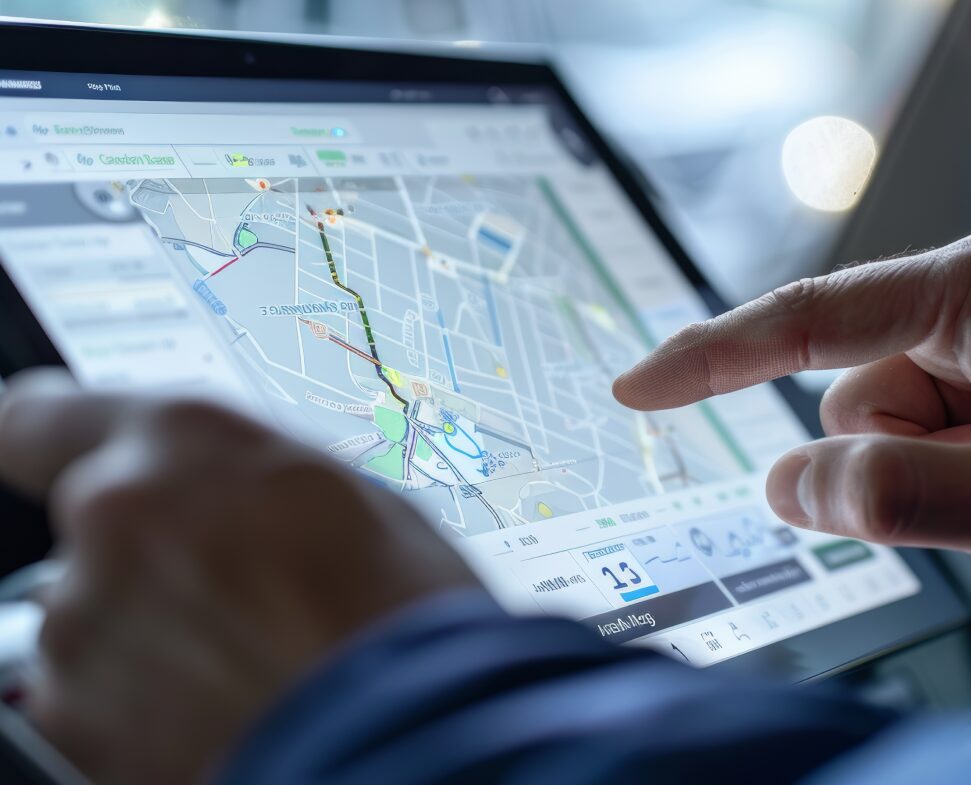
GPS tracking is the process of using the Global Positioning System (GPS), a network of satellites orbiting Earth, to determine the precise location of a vehicle, trailer, piece of equipment, or other asset. A GPS tracker receives signals from multiple satellites, calculates its position using timing data, and transmits that information over a cellular network to cloud based software, allowing users to monitor locations, routes, and activity from virtually any computer or mobile device.
Behind every location update is far more than a dot on a map. For businesses that depend on vehicles and equipment, this capability has become a critical part of telematics, helping organizations improve operational visibility, support fleet management, and document what happened before, during, and after an incident.
Why GPS Tracking Matters for Businesses

This capability helps businesses answer one critical question: Where are my vehicles, assets, or employees right now? The answer improves fleet visibility, reduces costs, enhances safety, and delivers better customer service.
For many industries, this capability is also essential for regulatory compliance. Businesses use it to support Hours of Service (HOS) requirements, Electronic Logging Devices (ELDs), and International Fuel Tax Agreement (IFTA) reporting.
Integrated with other platforms through APIs, including the ones your business already uses, GPS tracking can help optimize your fleet management even further. To learn more about the possibilities these integrations offer, check out our post, How API for GPS Tracking Improves Fleet Management.
The History of GPS: Who Invented It and How It Changed Navigation
According to NASA, the Global Positioning System (GPS) was developed by the U.S. Department of Defense in the early 1970s to provide precise navigation for military operations. The system became possible thanks to advances in satellite technology and the work of pioneering mathematicians.
One of the most influential was Gladys West, whose mathematical models of Earth’s shape made accurate satellite positioning possible. Her groundbreaking work laid the foundation for the technology used worldwide today. Another key contributor was Katherine Johnson, whose expertise in orbital mechanics helped advance satellite navigation.
The first GPS satellite launched in 1978, and the full 24-satellite constellation became operational in 1995. In 2000, the U.S. government removed Selective Availability, a restriction that intentionally reduced civilian GPS accuracy. Overnight, GPS became up to 10 times more accurate, paving the way for modern navigation apps, fleet tracking, logistics, and countless location-based services.
How Does GPS Tracking Work?
This process relies on trilateration to calculate a location. A GPS tracker receives signals from at least four satellites, measuring how long each signal takes to arrive. Using this data, it calculates the device’s precise latitude, longitude, and altitude.
However, GPS alone isn’t enough for today’s fleets. Signal interference from buildings, tunnels, or dense forests can reduce accuracy. That’s why modern fleet management and telematics platforms combine GPS with cellular networks, Wi-Fi, and multiple Global Navigation Satellite Systems (GNSS) like GPS, Galileo, GLONASS, and BeiDou to deliver more reliable real-time location data.
For businesses, this technology is much more than seeing a vehicle on a map. It powers driver management, route optimization, fuel management for fleet operations, fleet dispatch software, and vehicle maintenance software.
Modern location tracking solutions can also monitor valuable assets beyond vehicles. Companies use asset trackers and trailer GPS systems to protect equipment, while industries such as construction rely on construction equipment tracking software to reduce theft and improve utilization. Many platforms also include geofencing, which creates virtual boundaries that trigger alerts whenever a vehicle or asset enters or leaves a designated area.
As fleet technology evolves, GPS has become the foundation for advanced solutions like AI dash cams, fleet driver scorecards, fleet safety programs, idle reduction, fleet electrification, and EV fleet charging management, helping businesses reduce costs while improving safety and operational efficiency.
What Are the Main Components of a Tracking System?
Every location tracking solution, from a simple GPS asset tracker to advanced fleet management software, relies on five essential components that work together to deliver accurate, real-time location data.
1. GPS Satellites
GPS satellites continuously broadcast their location and precise time using onboard atomic clocks. A GPS receiver needs signals from at least four satellites to calculate an accurate position.
2. Ground Control Stations
Ground control stations monitor satellite health, update orbital data, and synchronize satellite clocks. Without this infrastructure, positioning accuracy would gradually decline, making reliable navigation and fleet visibility impossible.
3. GPS Receivers and Telematics Devices
A GPS receiver collects satellite signals and calculates a vehicle or asset’s location. In modern telematics systems, these receivers are installed in company vehicles, trailers, construction equipment, or standalone asset trackers. They can also collect engine diagnostics, driving behavior, and other operational data used for driver management and fleet safety programs.
4. Cellular Communication Networks
After calculating a location, the device sends data through cellular networks such as 4G LTE or 5G to a cloud platform. This enables businesses to monitor vehicles, trailer systems, and mobile assets in near real time without requiring constant manual updates.
5. Fleet Management Software
The final component is the software that transforms raw location data into actionable insights. Modern fleet management software combines positioning data with telematics to support fleet dispatch, vehicle maintenance software, fuel management for fleet, geofence alerts, and fleet driver scorecards. Many platforms also help businesses maintain FMCSA compliance, manage DVIR inspections, support ELD requirements, and simplify IFTA reporting.
Why These Components Matter
Each component plays a critical role. Satellites provide location signals, receivers calculate position, communication networks transmit the data, and software converts it into dashboards, reports, and alerts. Together, they power today’s tracking solutions for fleet management, construction equipment tracking, van fleet tracking, and thousands of other business applications.
Why Active Tracking Is the Standard for Modern Fleets
If you’re managing a business fleet, knowing where your vehicles were yesterday isn’t enough. You need to know where they are right now.
That’s why virtually every commercial fleet relies on active tracking systems. Unlike passive devices that simply record location history, active trackers continuously transmit location data through a secure cellular network, giving fleet managers real-time visibility into vehicles, trailers, and equipment.
With live location visibility, you can:
- Dispatch the closest driver to the next job.
- Recover stolen vehicles and assets faster.
- Receive instant geofence alerts.
- Monitor driver activity and route progress.
- Improve customer response times.
- Support fleet compliance and operational reporting.
For businesses that depend on vehicles every day, active tracking isn’t a luxury. It’s the industry standard.
When Does Passive Tracking Make Sense?
Passive tracking stores location history on the device instead of transmitting it in real time. While it’s often promoted as a tracker with no monthly fee, it lacks the live visibility businesses need to manage daily operations.
This approach may work for recreational vehicles or equipment that only requires occasional location history, but it isn’t designed for fleet management, dispatching, theft recovery, or time-sensitive operations.
If your business needs to respond quickly to customers, protect valuable assets, or improve productivity, an active system delivers the visibility passive setups simply can’t provide.
Why Fleet Managers Choose Active GPS Tracking
Real-time visibility creates real business value.
Modern platforms help fleet managers:
Optimize dispatch and routing. Reduce unauthorized vehicle use. Improve driver management and accountability. Strengthen fleet safety programs. Monitor trailers, equipment, and other high-value assets. Support FMCSA compliance, HOS regulations, ELD requirements, and DVIR reporting. Lower operating costs through better fuel management and reduced idle time.
Fleets don’t run on assumptions. They run on visibility. Active location monitoring turns raw data into faster dispatching, stronger accountability, safer drivers, and lower operating costs. That’s why it has become the standard for commercial fleet management.
How GPS Tracking Sends Live Data to Your Phone

GPS devices don’t communicate directly with your phone. Instead, they use a secure cloud platform to turn satellite signals into real-time location updates you can access from anywhere.
Here’s what happens behind the scenes:
GPS satellites determine the vehicle’s location. The onboard unit calculates its position and collects any additional telematics data. The device sends that information through a 4G LTE or 5G cellular network. Secure cloud servers process and store the data. The location appears in your mobile app or fleet management dashboard.
The entire process usually takes between 30 seconds and a few minutes, depending on reporting settings and cellular coverage. That’s why this kind of monitoring is considered near real-time, fast enough to support dispatching, theft recovery, and day-to-day fleet operations.
Is GPS Tracking Secure?
Yes. Modern platforms encrypt location data while it’s being transmitted and stored, helping protect sensitive business information from unauthorized access.
The best solutions also let administrators control who can view vehicles, drivers, and reports, making this technology an important part of both fleet security and operational oversight.
GPS Tracking vs. Telematics: What’s the Difference?
Location monitoring answers one question: Where is my vehicle?
Telematics answers several more:
How is it being driven? Is it idling too long? Is the engine reporting a fault? How much fuel is it consuming? When is maintenance due?
In other words, positioning data is one component of a telematics system.
Modern fleet management platforms combine location data with vehicle diagnostics to help managers improve safety, reduce operating costs, and make smarter business decisions.
What Can Telematics Measure?
Depending on the vehicle and hardware, telematics can provide:
Real-time location Driver behavior Harsh braking and rapid acceleration Excessive idling Fuel consumption Engine fault codes Vehicle health Maintenance reminders Driver scorecards
This information supports driver management, fleet safety programs, vehicle maintenance software, fuel management for fleet, and more efficient dispatching.
How GPS Tracking Supports Fleet Compliance
For many fleets, this technology isn’t just about visibility. It’s also about compliance.
Modern telematics platforms automate many of the records fleet managers once completed manually, reducing paperwork while helping businesses meet regulatory requirements.
Hours of Service (HOS)
Commercial drivers in the U.S. must follow Hours of Service (HOS) rules established by the FMCSA. These regulations limit driving hours and require mandatory rest periods to reduce fatigue-related accidents.
GPS-enabled Electronic Logging Devices automatically record driving time, making HOS compliance easier and more accurate.
Electronic Logging Devices (ELDs)
An Electronic Logging Device (ELD) connects to a vehicle’s engine to automatically record driving hours, engine activity, and vehicle movement.
Besides helping fleets comply with federal regulations, ELDs eliminate paper logbooks and simplify roadside inspections.
Driver Vehicle Inspection Reports (DVIR)
A Driver Vehicle Inspection Report (DVIR) documents mechanical defects identified before or after a trip.
Digital DVIRs allow drivers to submit inspections electronically, giving maintenance teams immediate visibility into safety issues before they become costly breakdowns.
International Fuel Tax Agreement (IFTA)
Companies operating across multiple states must report fuel usage and miles traveled under the International Fuel Tax Agreement (IFTA).
Location data automatically records mileage by jurisdiction, helping fleets generate more accurate IFTA reports while reducing manual calculations.
Industries That Benefit Most from GPS Tracking
This technology delivers measurable benefits anywhere vehicles, drivers, or high-value assets need to be managed efficiently.
Some of the industries seeing the greatest return on investment include:
- Construction: Monitor heavy equipment, reduce theft, and improve equipment utilization with construction equipment tracking software.
- Field Services: Improve scheduling and dispatch for HVAC, plumbing, electrical, and fleet management for HVAC businesses.
- Transportation and Trucking: Support FMCSA compliance, manage trailer GPS systems, automate ELD and DVIR reporting, and improve fuel efficiency.
- Delivery and Logistics: Optimize routes, improve customer ETAs, and reduce failed deliveries.
- Utilities and Energy: Coordinate service vehicles during emergencies while protecting valuable field equipment.
- Auto Dealerships: Monitor loaner vehicles, protect inventory, and recover stolen assets faster.
- Government Fleets: Improve dispatch, emergency response times, and fleet utilization.
The operational challenges vary by industry, but the goal is always the same: better visibility, stronger accountability, and lower operating costs.
FAQs
Can GPS tracking work without cell service?
Yes and no. A GPS receiver can calculate its location using satellite signals without cell service. However, real-time GPS tracking requires a cellular connection to send that location to a fleet management platform. If connectivity is lost, most GPS trackers store the data and upload it once the signal returns.
Can GPS tracking work without an internet connection?
Yes. GPS uses satellites—not the internet—to determine location. Internet or cellular connectivity is only needed to transmit location data so you can view it from a mobile app or web dashboard.
Does GPS tracking drain a vehicle’s battery?
A professionally installed GPS tracker draws very little power and is designed to operate continuously without affecting a healthy vehicle battery. Battery-powered asset trackers are optimized for low power consumption and can often operate for months or even years, depending on reporting frequency.
Can GPS tracking help recover stolen vehicles or equipment?
Yes. Active GPS tracking provides real-time location updates that can help businesses locate stolen vehicles, trailers, or equipment more quickly. Features like geofence alerts and movement notifications can also help detect unauthorized use before an asset travels far.
Is GPS tracking legal for businesses?
Generally, yes. Businesses can use GPS tracking on company-owned vehicles and assets, provided they comply with applicable federal, state, and local laws. Employers should clearly communicate their GPS tracking policies to employees and obtain consent when required.
What’s the difference between a GPS tracker with and without a monthly fee?
A GPS tracker with no monthly fee typically stores location history on the device for later retrieval. Active GPS tracking systems use a cellular connection to transmit live location data, which usually requires a monthly service plan. Businesses that need real-time visibility generally choose active tracking.
Can GPS tracking improve fuel efficiency?
Yes. GPS tracking helps reduce unnecessary idling, optimize routes, monitor unauthorized vehicle use, and identify inefficient driving habits. Combined with telematics, these insights can help lower fuel consumption and reduce operating costs across a fleet.
How do businesses use GPS tracking?
Businesses use GPS tracking to improve fleet visibility, dispatch drivers more efficiently, monitor trailers and equipment, strengthen fleet safety programs, support FMCSA compliance, and protect high-value assets from theft or unauthorized use.