
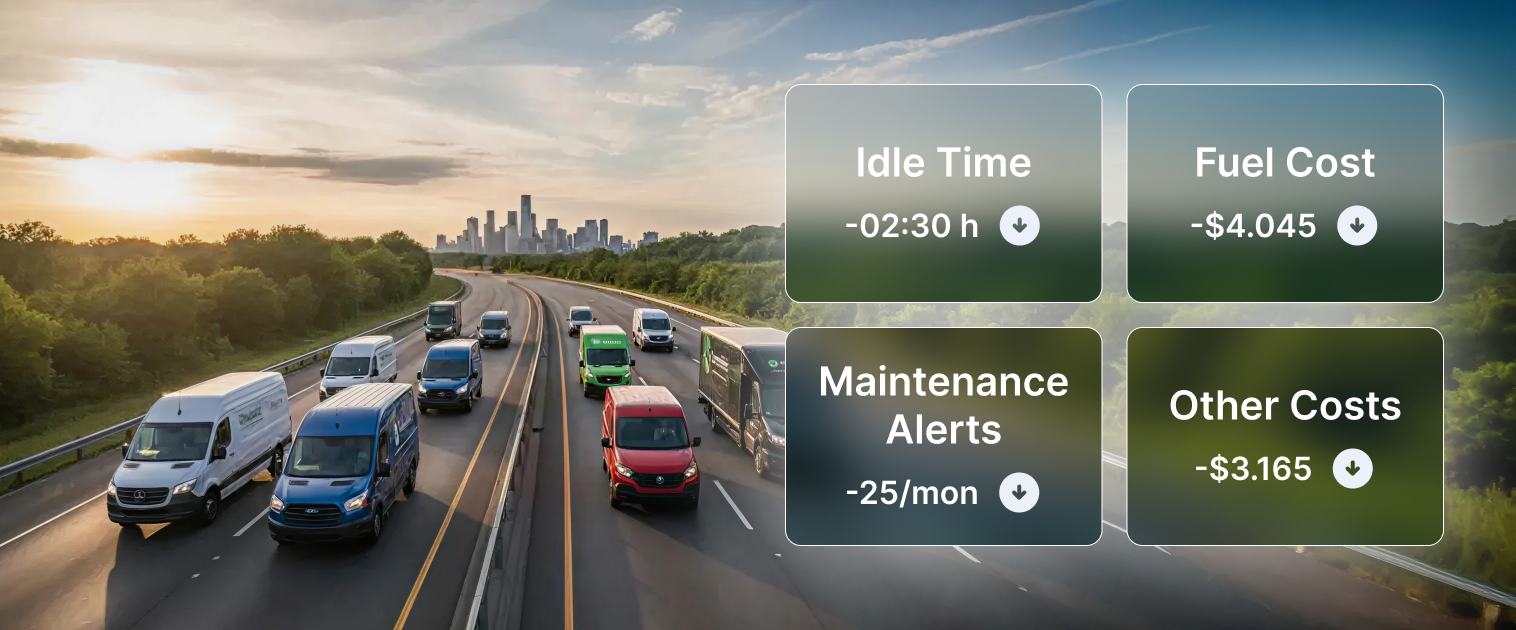
How to Reduce Fleet Management Cost with GPS Tracking
How to Reduce Fleet Management Cost
Up Your ROIQ: Why Smart Fleet Managers Depend on GPS
In today’s economy, every dollar matters, especially in fleet management, where razor-thin margins and rising fuel and maintenance costs can impact your bottom line fast. Whether you operate a long-haul trucking company, manage a regional HVAC fleet, or run a handful of delivery vans, GPS tracking is one of the smartest, most scalable investments you can make.
Why? Because GPS tracking systems do more than just tell you where your vehicles are. They give you real-time data to control costs, increase efficiency, improve safety, and deliver better service. And most importantly, they deliver clear, measurable ROI.
Let’s break down exactly how GPS tracking reduces fleet costs, with real-world examples and expert insights from the field.
The ROI of GPS Tracking: It Starts With the Investment
One of the most common questions we hear from fleet operators is: “What’s this going to fleet management costs for me?” And our answer is always the same: It’s not just a cost, it’s an investment in fleet management that leads to significant cost savings.
Hardware Costs: Scalable and Affordable
- Entry-level devices start under $50, great for basic vehicle tracking and location updates, making them a cost-effective solution for small businesses.
- Advanced GPS units with OBD-II diagnostics, harsh driving detection, and real-time alerts typically range from $100–$200.
- These are one-time investments that continue delivering value every mile your vehicle travels.
Installation: Low-Cost, High-Impact
- Hardwired GPS devices offer more functionality and power stability, especially for heavy-duty or high-mileage vehicles.
- Installation typically runs under $100, and for many plug-and-play models, no professional help is needed.
- For fleets with in-house maintenance teams, installation can be done during routine service checks, helping to reduce expenses.
Monthly Service: Powerful Insights at a Low Cost
- Most GPS tracking platforms offer scalable plans, starting around $15–$25 per month per vehicle.
- These fees cover cellular data, cloud software access, analytics dashboards, driver alerts, maintenance reports, and more.
Insight: The key metric here is Total Cost of Ownership (TCO). When you factor in savings on fuel, repairs, insurance, and customer service, GPS tracking quickly moves from a nice-to-have to a mission-critical tool.
Fuel Costs: Your Biggest Savings Opportunity
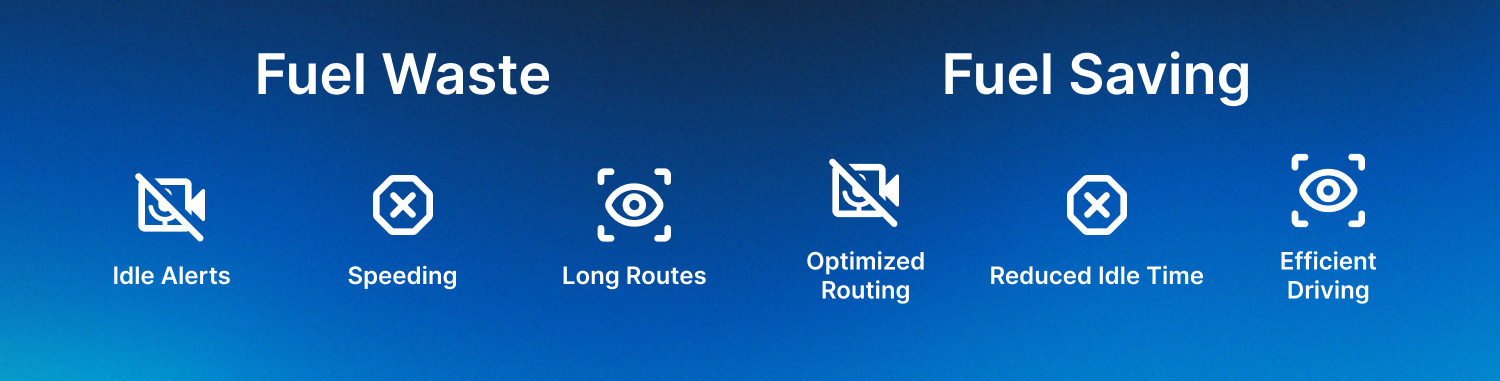
Fuel is often a fleet’s #1 operating expense. Unlike the price at the pump, which you can’t control, GPS tracking helps you control how and when your fuel-efficient vehicles consume fuel.
GPS Helps Slash Fuel Costs by:
- Reducing idle time with alerts when vehicles are stationary with engines running to reduce fuel consumption.
- Monitoring speeding, rapid acceleration, and hard braking, all behaviors that burn fuel faster.
- Optimizing routes based on real-time traffic and historical travel data.
- Spotting patterns of fuel fraud or excessive fill-ups through integrated fuel card reporting.
Case in Point: One equipment rental company reduced idling by over 40%, saving $100,000 and 28,000 gallons of fuel in just one month after implementing idle time alerts across its fleet.
Insight: According to the U.S. Department of Energy, every 5 mph driven over 60 mph adds about $0.24 per gallon in fuel cost. Multiply that by a few dozen vehicles over a year, and you’ll see why GPS-enabled driver coaching pays off fast.
Read: Fleet Tracking for Fuel Cost Savings
Curb Driver Misuse & Enforce Vehicle Accountability
Vehicle misuse isn’t always malicious, but monitoring driver behavior is crucial as it’s almost always expensive. Off-hour driving, side jobs, excessive idling, and unauthorized detours all add up.
GPS Tracking Enables:
- Time-stamped trip logs to match mileage claims with actual routes.
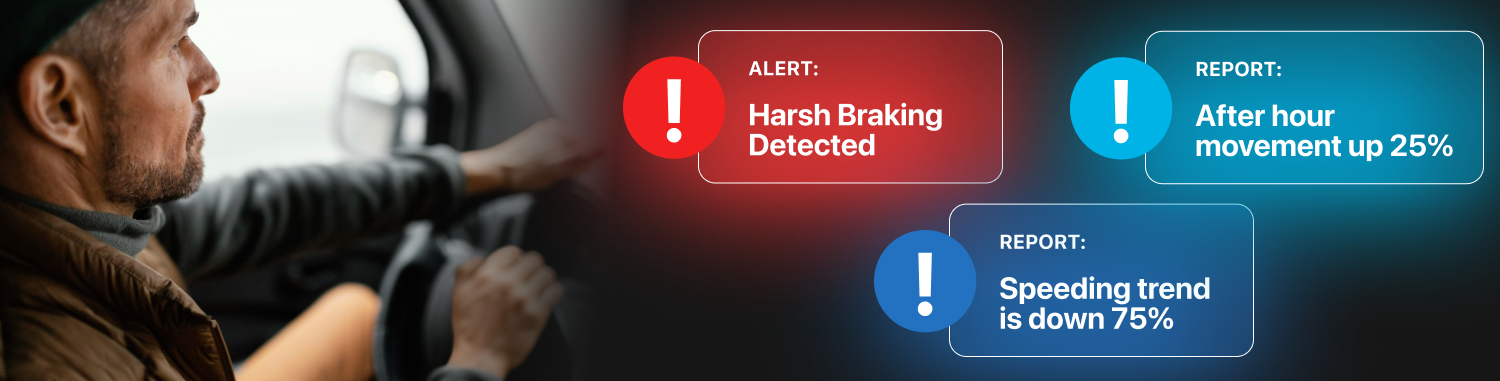
- Alerts for after-hours usage and weekend vehicle movement.
- Reports showing start/end times, actual service windows, and stop durations.
Insight: We’ve seen small contractors recover thousands in fraudulent overtime claims just by comparing GPS logs to submitted timesheets. These tools aren’t about mistrust; they’re about protecting your company and empowering honest employees. Additionally, monitoring driving behaviors such as harsh braking can enhance fuel efficiency through training and incentives for drivers.
Read: GPS Tracking Driver Accountability
Smarter Dispatching: Reduce Miles & Response Times
Without GPS, dispatchers often rely on driver check-ins, calls, or guesstimates to assign jobs, making it difficult to optimize routes. That creates delays, overlaps, and inefficiencies.
With GPS, Dispatchers Can:
- View live locations and assign the closest vehicle instantly, enhancing efficient route planning.
- Reduce customer wait times and increase satisfaction.
- Avoid double-bookings or overlapping job assignments.
Insight: In the service industry, response time is everything. GPS tracking helps companies hit tighter delivery windows and emergency service deadlines, turning logistics into a competitive advantage.
Stay Ahead on Maintenance & Extend Vehicle Life
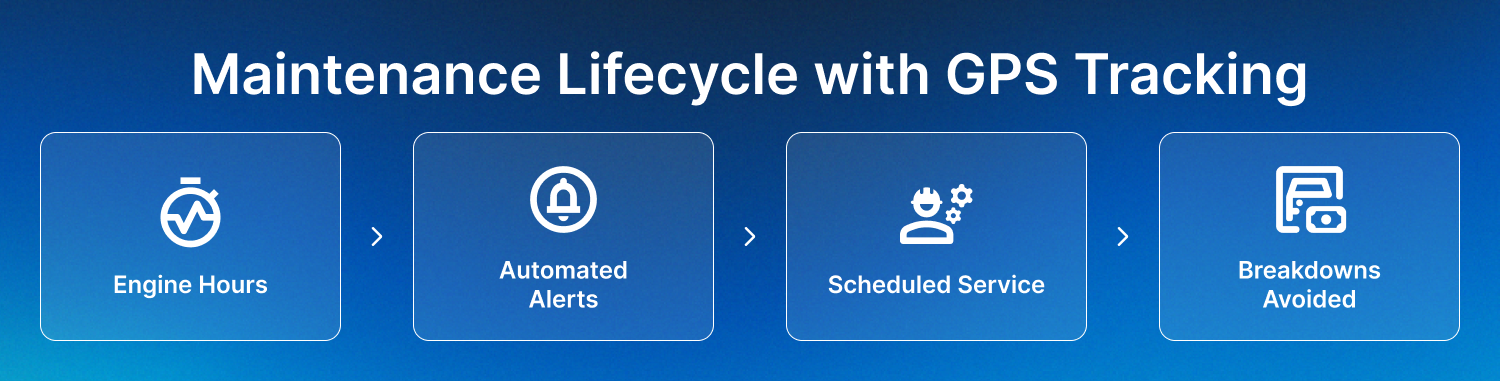
Unexpected breakdowns are expensive, not just in repair bills, but in lost productivity. Proper vehicle maintenance is crucial to prevent small issues from escalating into costly problems. A GPS tracking system helps you stay proactive with your fleet’s health.
Maintenance Benefits:
- Automated service reminders based on mileage or engine hours.
- Engine diagnostics and fault code alerts from connected trackers.
- Maintenance logs to track repair history across all vehicles.
Insight: Regular maintenance, including tire rotations, extends a vehicle’s life by 20–30% and significantly reduces downtime. That’s especially valuable in fleets where vehicle replacement costs run high.
Theft Protection & Lower Insurance Premiums

Fleet vehicles are often targets for theft, whether they’re left overnight on job sites or parked in open lots. Monitoring fleet maintenance costs is crucial as it can significantly impact the total cost of ownership (TCO). GPS trackers offer an instant line of defense.
GPS Tracking Helps:
- Recover stolen vehicles quickly by sharing real-time locations with law enforcement.
- Identify suspicious after-hours movement or tampering.
- Provide driver ID and trip data, verifying who was behind the wheel.
Insight: Many insurers now offer fleet premium discounts for vehicles equipped with GPS tracking. It’s a win-win: your assets are safer, your insurance costs go down, and you gain a competitive edge.
ROI Snapshot: How GPS Tracking Pays You Back
Let’s look at the significant savings and typical 12-month ROI for a 10-vehicle fleet using GPS tracking:
| Category | Annual Savings (Estimate) |
|---|---|
| Fuel Savings | $6,000 – $10,000 |
| Reduced Overtime Fraud | $2,000 – $4,000 |
| Maintenance Optimization | $1,500 – $3,000 |
| Insurance Discounts | $1,000 – $2,500 |
| Theft Recovery/Security | Priceless (average $10K+ vehicle) |
That’s $10K–$20K+ in annual savings on a modest 10-vehicle fleet—not including the improved customer service and dispatch efficiency GPS tracking enables.
Final Thoughts: GPS Tracking Is the Smartest Investment for Any Fleet

The numbers don’t lie. Leveraging technology like GPS tracking offers clear cost-cutting, risk-reduction, and operational efficiency benefits across every kind of fleet. And with today’s low hardware costs and flexible monthly plans, the barrier to entry has never been lower.
Whether you’re managing a national operation or just trying to rein in the costs on your small business fleet, the best time to invest in GPS tracking is now.
Next Step: Get a Personalized GPS Plan for Your Fleet
At BrickHouseGPS, we’ve helped thousands of businesses, from HVAC crews to delivery fleets, find the right gps fleet management system and fleet management software for their needs. Let us help you build a smarter, safer, and more profitable fleet.
Book Demo & Reduce Fleet Management Cost
FAQ
How can GPS fleet management reduce fuel costs?
Fuel is one of the highest variable costs in fleet management. A GPS fleet management system helps cut fuel costs by:
- Monitoring driver behavior (e.g., idling, harsh braking, speeding)
- Optimizing routes to avoid traffic and minimize mileage
- Identifying unauthorized vehicle use or unnecessary trips
- Encouraging fuel-efficient driving habits
With better fuel management, you can reduce fuel consumption and make more informed decisions about fleet efficiency.
What impact does GPS tracking have on fleet maintenance costs?
Maintenance and repair costs can spiral if not managed proactively. GPS tracking systems allow you to:
- Schedule regular maintenance like oil changes and tire rotations
- Catch issues early to prevent costly repairs
- Track vehicle lifespans and plan for timely replacements
- Monitor vehicle diagnostics in real-time
Reducing fleet maintenance costs leads to fewer breakdowns and less downtime, keeping your day-to-day operations running smoothly.
Can GPS tracking help reduce insurance premiums?
Yes, many insurance companies offer lower premiums when fleets use GPS tracking. Why?
- It encourages safe driving practices
- Reduces risk of theft and improves vehicle recovery
- Provides valuable data on driver performance and fleet reliability
Safer fleets mean reduced risk, and that means cost savings on coverage.
What kind of cost savings can fleet operators expect with GPS tracking?
While results vary by fleet size and usage, operators often see:
- 10–25% reduction in fuel costs
- 20–30% lower maintenance and repair costs
- Improved driver accountability, reducing operational costs
- Better fleet utilization and longer vehicle life
That adds up to significant savings across your total cost of ownership.
Is fleet tracking worth it for smaller fleets too?
Absolutely. Even fleets with just a few vehicles can see real ROI. In fact, smaller fleets may benefit more because every dollar saved has a larger impact on the bottom line.
GPS fleet management levels the playing field, helping small businesses operate like the big guys.