
What Is Fleet Management? A No-Nonsense Guide for Business Owners
If you manage vehicles, drivers, or mobile assets, fleet management is how you keep all of it running smoothly without wasting time, money, or sanity.
In simple terms, fleet management means overseeing all the vehicles, equipment, and people that move your business forward. From delivery vans to service trucks, it’s the system that helps you track, maintain, and optimize every asset, so you can cut fuel costs, reduce downtime, and protect your bottom line.
That’s the short answer. Now let’s break down how it actually works, why it matters, and how businesses like yours are using modern tools (like GPS tracking) to make smarter, faster decisions.
What Fleet Management Really Means for Your Business

Fleet management isn’t just about tracking vehicle location; it’s about controlling every moving part of your business operations. A strong fleet management system gives fleet managers the visibility and tools to optimize performance, reduce fuel costs, and protect assets across your company’s fleet.
In practice, proper fleet management combines vehicle tracking systems, driver management, and preventative maintenance to improve operational efficiency and reduce fleet costs. Whether you’re running five vans or five hundred commercial vehicles, it’s the framework that keeps your entire operation on time, compliant, and profitable.
Here’s what it really impacts:
- Profitability: Cut unnecessary miles, idle time, and fuel usage through smarter route planning and driver behavior insights.
- Productivity: Keep drivers accountable and vehicles running efficiently with automated maintenance alerts, GPS tracking, and real-time fleet data.
- Safety & Compliance: Ensure driver safety, track hours of service (HOS), and maintain detailed vehicle inspection records to stay compliant and reduce risk.
- Customer Service: Deliver faster, more reliable service through optimized routes and accurate ETAs, the kind that keeps customers coming back.
Simply fleet management acts as your command center, connecting vehicle diagnostics, driver safety programs, and maintenance costs into one unified system. With the right tools, fleet managers can reduce operational costs, increase productivity, and extend the lifecycle of every vehicle in the fleet.
Key Components of Fleet Management
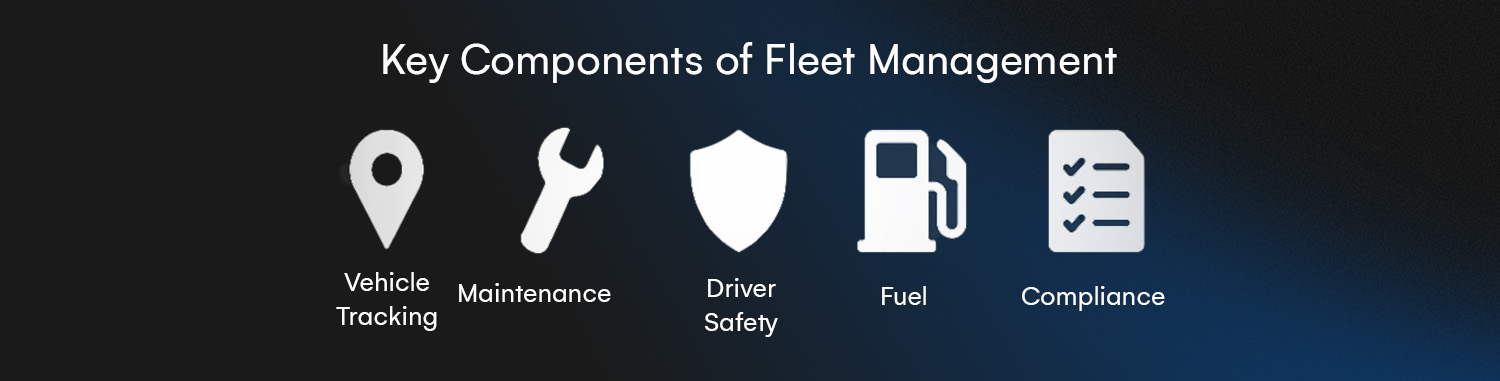
A modern fleet management system brings every part of your operation together, from asset tracking and driver performance to maintenance schedules and fuel efficiency.
Here’s how the right fleet management software keeps your business vehicles performing at their best.
1. Vehicle Tracking
Real-time GPS tracking and telematics let fleet managers see every vehicle’s location, route, and status instantly. You can verify driver activity, monitor unauthorized stops, and optimize routes for faster deliveries.
By tracking vehicle location and usage data, businesses gain operational visibility that improves route planning, reduces idle time, and lowers fuel consumption. In short: fewer miles, less waste, and more control over your company’s fleet.
2. Maintenance Management
Fleet maintenance is where most operational costs sneak up. A proper fleet management process includes scheduled service reminders, vehicle diagnostics, and preventative maintenance programs that stop breakdowns before they start.
By automating maintenance schedules, you reduce downtime, extend vehicle lifecycle, and protect your investment. That’s how effective fleet managers keep maintenance costs and vehicle downtime to a minimum.
3. Driver Performance & Safety
Your drivers represent both your brand and your bottom line. Through telematics, fleet managers can track driver behavior, including speeding, harsh braking, and excessive idling.
This data helps implement driver training programs, improve retention, and ensure driver safety through proactive coaching. Many companies use these insights to build incentive programs that reward safe, efficient driving, leading to lower accident rates and reduced insurance costs.
4. Fuel Management
Fuel is often a fleet’s single largest expense. Fleet management solutions help track fuel usage by vehicle, driver, or route to identify inefficiencies.
By implementing fuel efficiency programs, managing preferred fueling locations, and analyzing consumption patterns, you can reduce fuel costs by 10% to 40% (source: NAFA Fleet Management Association).
Effective fuel management also supports sustainability goals by minimizing emissions and optimizing engine performance.
5. Compliance & Reporting
Staying compliant isn’t optional, it’s essential. Fleet management software automates key reporting requirements such as IFTA, DVIR, and ELD & HOS tracking.
This not only ensures regulatory compliance but also provides a digital audit trail that protects your business from fines, penalties, and downtime. Simplified compliance means fleet managers can focus on operations, not paperwork.
Why Fleet Management Matters in 2025
Fleet operations are no longer about managing vehicles, they’re about managing performance. With rising fuel costs, labor shortages, stricter compliance requirements, and growing demand for faster deliveries, operational efficiency has become a survival metric, not a luxury.
Today’s fleet managers are under pressure to do more with less, maintain uptime, control expenses, and retain drivers, all while meeting customer expectations and sustainability goals.
That’s where modern fleet management systems make a measurable impact. By integrating vehicle tracking, fuel management, preventative maintenance, and driver performance data, businesses can see exactly where inefficiencies hide and how to fix them.
According to Automotive Fleet (2025), organizations using telematics and advanced fleet management solutions save an average of 15–25% on operational costs within their first year. These savings come from reduced fuel consumption, optimized routes, and fewer maintenance emergencies, translating directly into stronger margins.
But the benefits go beyond cost reduction. Advanced systems now help companies:
- Transition toward electric vehicles (EVs) with better utilization data and charging analytics.
- Improve driver retention by reducing burnout through efficient scheduling and safety programs.
- Optimize fleet performance across every vehicle class with predictive maintenance and AI-driven insights.
In short: effective fleet management isn’t just about cutting costs, it’s how forward-thinking companies stay competitive.
With smarter data, safer drivers, and more efficient routes, businesses can turn every mile into measurable ROI.
Modern Fleet Management Tools

The tools behind today’s most efficient fleets are smarter, faster, and easier to use than ever. Modern fleet management software gives businesses of any size access to the same visibility and performance once reserved for enterprise fleets, without the complexity or long-term contracts.
Here’s what’s driving that transformation:
Cloud-Based Fleet Management Systems
With cloud-based platforms, fleet managers can monitor vehicle tracking, driver behavior, and maintenance data from any device, anywhere. These systems provide instant updates on vehicle location, engine diagnostics, and fuel consumption, ensuring real-time visibility across your company’s fleet.
Mobile Fleet Tracking Apps
Mobile apps give fleet managers and drivers an always-on connection. They support driver check-ins, route planning, and safety procedures, sending real-time alerts about vehicle issues, route changes, or missed inspections. This keeps communication tight and accountability clear.
AI-Powered Fleet Analytics
Artificial intelligence is transforming fleet operations. Predictive analytics use live data from sensors and telematics to forecast maintenance needs, detect inefficiencies, and even suggest fuel efficiency programs or optimized routes. It’s like having a data analyst built into your dashboard, one that never sleeps.
Asset Tracking & Integration
Modern platforms also track assets beyond vehicles, tools, trailers, and heavy equipment, giving complete oversight of every moving part of your operation. Integrations with accounting, CRM, and dispatch systems streamline workflows and reduce administrative burden.
Real-World Example
A regional HVAC company with 22 service vans switched to GPS-based fleet management. Within six months, they saw:
- 18% fuel savings through route optimization.
- 30% fewer customer complaints thanks to improved arrival accuracy.
- Reduced maintenance costs after automating service alerts.
Fleet management didn’t just streamline operations, it gave their team more control, accountability, and time back.
How Fleet Management Impacts ROI
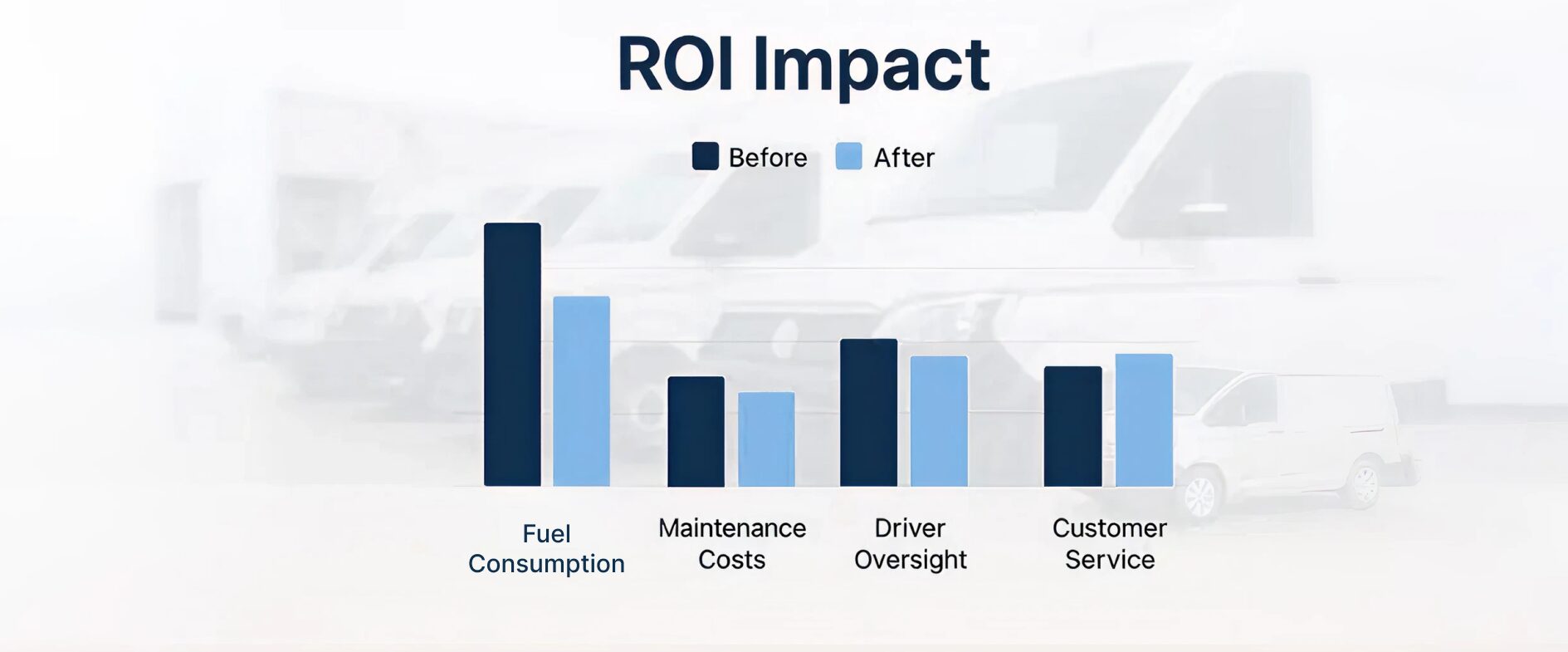
When done right, fleet management becomes a measurable driver of ROI, not just a tracking tool. It gives business owners and fleet managers the data, visibility, and control needed to cut operational costs, improve fleet efficiency, and extend the entire vehicle lifecycle.
Every decision, from route optimization to maintenance planning, directly affects profit margins. Here’s how effective fleet management solutions transform performance across key KPIs:
| KPI | Without Fleet Management | With Fleet Management |
| Fuel Efficiency | Untracked, high waste | 10–25% savings through route optimization, driver coaching, and fuel efficiency programs |
| Maintenance | Reactive, unplanned downtime | Predictive, preventative maintenance using vehicle diagnostics and telematics data |
| Driver Oversight | Limited visibility | Data-driven driver management, training, and performance insights |
| Customer Service | Inconsistent delivery times | Transparent, on-time, and verified through GPS tracking and route analytics |
| Cost Control | Manual tracking, unclear spend | Automated reports and measurable reductions in operational costs |
Each improvement compounds, a 10% gain in fuel efficiency, a 15% drop in maintenance costs, and higher driver retention can add up to thousands in annual savings per vehicle.
Fleet managers who rely on integrated fleet management software not only reduce expenses but also improve fleet performance, safety, and accountability. This creates a sustainable ROI loop:
Better data → Smarter decisions → Lower costs → Higher profits.
That’s the kind of ROI you can measure, not just imagine. Every metric ties back to profit and peace of mind, the two things business owners care about most.
Choosing the Right Fleet Management Solution

Not all fleet management solutions are created equal. The best systems don’t just track, they transform how your business operates. The right platform will help you reduce costs, improve fleet performance, and simplify operations without locking you into endless contracts or hidden fees.
Here’s what to look for when evaluating fleet management software:
- Ease of Use: A clean, intuitive dashboard that delivers real-time insights on vehicle tracking, driver behavior, and maintenance alerts, no IT team required.
- Scalability: Whether you manage 5 vehicles or 500, your system should grow with your business. Look for tools that handle multiple vehicle classes, asset types, and driver profiles without slowing down.
- Real Support: Responsive, human service, not bots. The best fleet management companies offer hands-on onboarding, training, and live help from real experts who understand fleet operations.
- Transparent Pricing: Clear, contract-free plans. You should pay for performance, not promises. True ROI comes from flexibility, not fine print.
Pro Tip: Be wary of “all-in-one” systems that sound impressive but deliver complexity instead of clarity. Effective fleet management services make your life easier, not harder, by integrating asset tracking, fuel management, and driver performance tools into one seamless experience.
When you choose a platform that’s simple, scalable, and supported by real humans, you’re not just buying software, you’re investing in operational efficiency, driver accountability, and long-term profitability.
Final Thoughts: Fleet Management Simplified
Fleet management isn’t just technology, it’s strategy. It’s about knowing your assets, empowering your team, and making decisions backed by data.
If you’re ready to see how GPS fleet tracking can reduce costs and simplify operations, start a pilot with BrickHouse for Business today. Fast setup. Real humans. Real results.
FAQs
1. What is fleet management in simple terms?
Fleet management is the process of tracking, maintaining, and optimizing a company’s fleet of vehicles to improve fuel efficiency, driver safety, and cost control. It brings together tools like GPS tracking, vehicle maintenance scheduling, and asset tracking to keep operations running smoothly and profitably.
2. What does a fleet manager do?
A fleet manager oversees the daily operations of business vehicles, from vehicle acquisition and driver scheduling to maintenance, compliance, and fuel management. Their job is to ensure fleet performance, safety procedures, and operational efficiency while keeping costs in check.
3. How does GPS help in fleet management?
GPS tracking systems give real-time visibility into every vehicle’s location and route, helping businesses reduce fuel consumption, prevent unauthorized use, and improve route planning. For fleet managers, it’s a vital tool for ensuring driver accountability and on-time delivery performance.
4. What are the benefits of fleet management systems?
Modern fleet management software helps automate vehicle inspections, driver management, maintenance tracking, and fuel usage reports. These systems reduce operational costs, improve driver safety, and provide data insights that boost fleet efficiency and ROI.
5. How can small businesses use fleet management?
Even small fleets benefit from cloud-based fleet management solutions. These platforms offer scalable tools for vehicle tracking, preventative maintenance, and fuel management, giving small businesses enterprise-level visibility without enterprise-level complexity or cost.
6. What is the ROI of fleet management software?
Most companies experience a 15–25% reduction in operational costs within the first year of implementing fleet management software. The ROI comes from optimized routes, reduced fuel costs, fewer maintenance emergencies, and improved driver productivity.
7. What industries use fleet management?
Industries that depend on mobile operations, like delivery, HVAC, construction, landscaping, utilities, and logistics, rely on fleet management systems to manage their commercial vehicles, ensure driver safety, and maintain operational efficiency.
8. How does fleet management improve driver safety?
Fleet management tools monitor driver behavior, such as speeding, harsh braking, and idle time, allowing managers to implement driver training programs and enforce safety procedures. This proactive approach reduces accidents and improves overall fleet performance.
9. How can fleet management reduce fuel costs?
By tracking fuel usage, optimizing routes, and analyzing vehicle diagnostics, fleet management systems help businesses reduce fuel consumption and improve overall fuel efficiency. Some fleets save up to 20% in annual fuel expenses through data-driven fuel management programs.
Ready to See ROI From Your Fleet?
Stop wasting money on idle trucks, rising fuel, and preventable breakdowns. Explore BrickHouse GPS fleet tracking or talk to an expert for a personalized demo.